I often wonder how many people who have written about Daniel Kahneman's famous book Thinking, Fast and Slow have actually read it. I say this because many of the business pieces I see about the book are just listicles of human biases. The only takeaway from over 400 pages seems to be that humans are irrational beings and that our judgment is fatally flawed.
That was not Kahneman's conclusion. Yes, Kahneman (and Tversky) showed that there are systematic flaws in the way our minds work in specific situations. But he also stressed that these biases are side effects of mental processes that usually give us remarkably good judgments. Or, to use Kahneman's own words, "the focus on error does not denigrate human intelligence, any more than the attention to diseases in medical texts denies good health. Most of us are healthy most of the time, and most of our judgments and actions are appropriate most of the time."
This is because our brains actually function as prediction machines. We constantly use the past to anticipate future events. And despite our biases, a growing body of work shows that humans can be remarkably good at guiding decisions in environments of high uncertainty — especially when we have real expertise and repeated feedback. If you are an executive, that is probably a pretty good description of you.
Your judgment, intuition, gut — call it what you want — is important in the decision-making process. But how and when to use it depends on the kind of decision you are making.
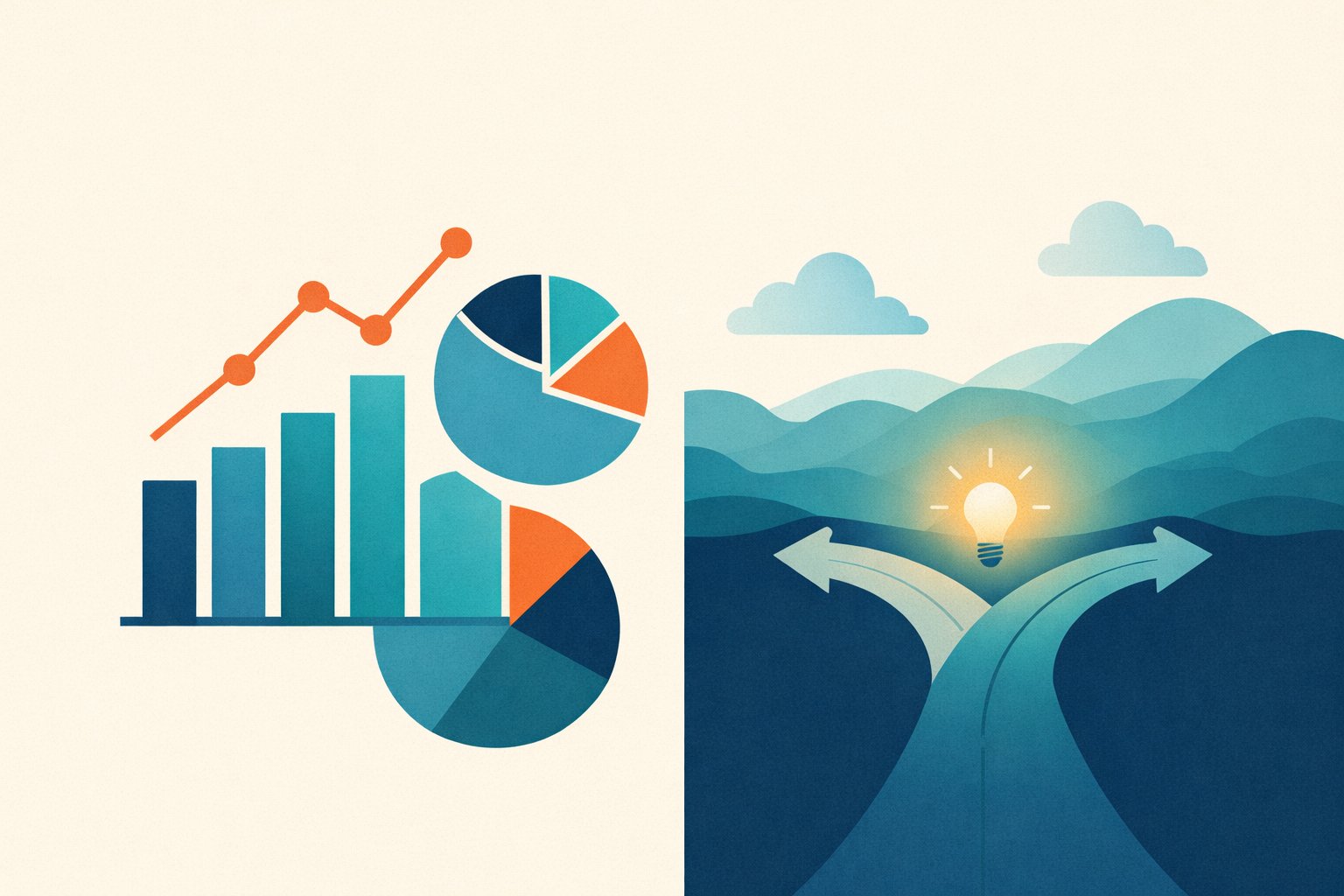
Most of what we call "decisions" in organizations are what I would call operational decisions: calls about how to tune a process, adjust a policy, or reallocate resources. I am not trying to minimize the impact of those types of decisions. But in these cases we usually have a large store of data that helps advise us. We can use this data to detect patterns and trade-offs across more events than any one of us could ever hold in our head. In these situations, the essential role of executive judgment is to test the conclusions produced by modeling that data. Data can contain its own set of biases. So when a model's recommendation clashes with what your experience tells you, it's time to ask questions until you find the flaw in the data, the model, or your judgment.
A much smaller, but much more consequential, set of decisions are what I call path decisions. These are the one-way-door choices that define a company's trajectory — which products to introduce, what markets to expand into, which acquisitions to pursue, and so on. With these, the data is sparse at best. What data does exist is usually backward-looking or only loosely related to the future you care about. So, in path decisions, data and judgment reverse roles. Executive judgment forms the backbone of the decision. Data (and there is always some data) serves to inform and challenge your thinking. But, as with judgment in the previous scenario, it should not be dismissed until the discrepancies are acceptably explained.
The point I am trying to make is that too many people have used Kahneman's work to dismiss human judgment. On the other hand, too many executives still overrule data in favor of their own experience. The key is to always use both — just in different roles. In operational decisions, let data lead and judgment challenge it. In path decisions, let judgment lead and data challenge it.
← Back to Writing